Japan's L0 Series Maglev Hits 375 mph: Future of High-Speed Rail
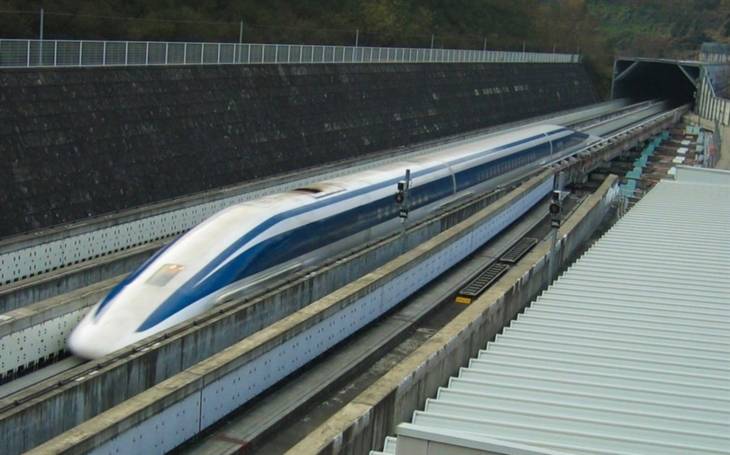
① 🪝 Impression Hook
Like a silent comet slicing through concrete veins, Japan’s L0 Series Maglev floats beyond speed—where friction fears to follow.
② 🗺️ Schema Map (30-second overview)
🔑 Point A — Japan's L0 Series Maglev hits 375 mph (603 km/h), setting a world record for rail speed.
📈 Point B — Utilizing superconducting maglev tech, it levitates above the track, eliminating wheel friction.
📉 Point C — Despite delays, the Chuo Shinkansen line aims to link Tokyo and Nagoya by 2027, then Osaka by 2037.
🌐 Point D — The project promises transformational travel times: Tokyo–Osaka in just 67 minutes.
TL;DR: Japan’s maglev train redefines rail with 375 mph speed, zero contact, and half-hour city links.
③ 🧩 Triple-Chunk Core
Chunk 1 – What happened
Japan’s L0 Series Maglev achieved a staggering 375 mph during testing, marking the fastest rail speed ever recorded.
Chunk 2 – Impact
This leap could slash Tokyo–Osaka commute from 2.5 hours to under 70 minutes, reshaping regional connectivity and urban planning.
Chunk 3 – Insight
By floating above tracks via magnetic repulsion, the train avoids friction, noise, and wear—ushering in a new era of sustainable high-speed transit.
④ 📚 Glossary
Maglev — Short for \"magnetic levitation,\" a technology that uses powerful magnets to lift and propel trains without touching the rails.
Superconducting Magnet — A magnet made from coils of superconducting wire that generates intense magnetic fields with near-zero electrical resistance when cooled cryogenically.
⑤ 🔄 Micro-Recall
Q1: What is the top speed of Japan’s L0 Series Maglev?
A1: 375 mph (603 km/h).
Q2: How does maglev eliminate friction?
A2: By levitating above the track using magnetic fields, removing physical contact.
Q3: When is the Chuo Shinkansen expected to open between Tokyo and Nagoya?
A3: Targeted for 2027, pending regulatory and construction progress.
⑥ 🚀 Action Anchor
for transportation & policy decision makers:
1️⃣ Invest in maglev-ready corridors to future-proof national infrastructure.
2️⃣ Accelerate regulatory frameworks for ultra-high-speed ground transport.
3️⃣ Partner with Japan for tech transfer and joint R&D on sustainable maglev systems.
The future isn’t flying cars—it’s frictionless rails beneath our feet.