I Tried Google’s Craziest AI Tools: But, Only 7 You Need to Care About
⏳ TL;DR
- Google has launched several AI tools designed to reduce digital overwhelm and boost productivity
- Seven standout tools include AI-Powered Search, Jules (coding assistant), collaborative AI agents, Project Astra (automated form filling), Imagine 4 (image generator), Gemini in Chrome, and Action-Based Search
- These tools focus on real-world problems like time management, learning barriers, and repetitive tasks
- The author emphasizes practical utility over hype — these are tools that actually help people feel less stuck
✍️ The Story
You know that feeling when you open your browser to solve one problem… and three hours later, you’re lost in a maze of tabs, articles, and half-finished searches? Yeah, me too.
That’s why I took a deep dive into Google’s newest AI tools—not just to see what’s cool, but to find what’s genuinely helpful. After testing dozens, only seven stood out as truly transformative for everyday users.
Take AI-Powered Search: it doesn’t just spit out links—it talks to you like a patient friend. A single mom trying to refinance her mortgage can ask questions in plain English and get clear, step-by-step answers without drowning in jargon.
Then there’s Jules, Google’s AI coding assistant. It’s not just for developers—it helps designers, entrepreneurs, and even beginners write code they don’t understand. One freelancer described how Jules helped her build an animated menu without ever touching a line of code herself.
And let’s talk about Project Astra—a tool that literally browses the web like a human. For small business owners buried in grant applications, Astra learns once and repeats the process automatically. No more clicking through forms like a robot on caffeine.
Imagine 4 brings creativity to everyone—even those who’ve never used Photoshop. Type a description like “hopeful child looking out a window, sunset light,” and boom—photorealistic art appears.
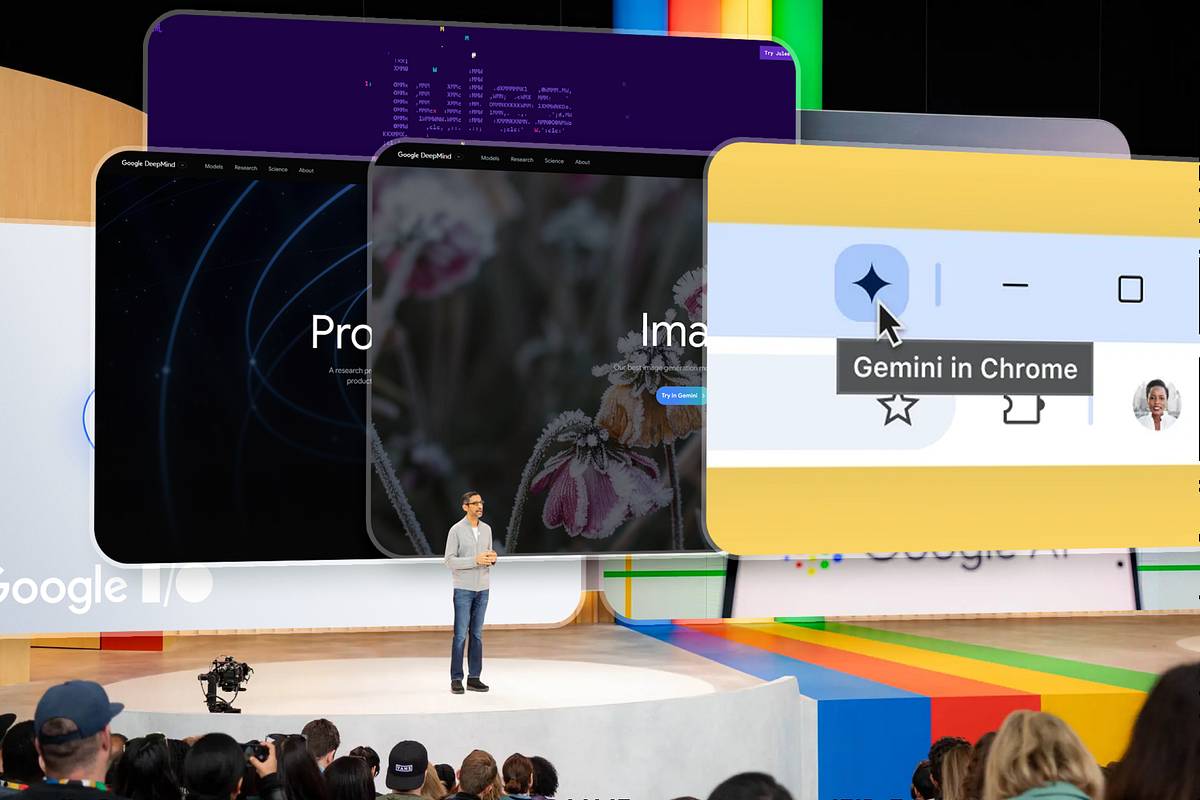
Gemini inside Chrome turns browsing into a conversation. Teachers can highlight text and instantly compare policies across countries without leaving the page.
Finally, Action-Based Search does what it says: it takes action instead of giving instructions. Need a last-minute dinner reservation? Just search—and Google books it for you.
These aren’t flashy gimmicks. They’re quiet solutions to real pain points: confusion, wasted time, and the crushing weight of digital overload.
🔥 Why It Matters
- These tools shift from information delivery to task completion, reducing cognitive load
- They empower non-experts—designers, parents, teachers—to do things previously reserved for specialists
- This marks a move toward AI that feels like a teammate, not just a tool
🔗 How It Connects
- Related: Google AI Blog for deeper technical insights
- Background: See how Google’s AI strategy evolved from search to agent-based systems
- Further reading: How AI Is Changing Productivity Tools
Sources
Play
Thanks for providing the link. However, please specify which specific article or topic you'd like a summary on regarding reactions and opinions. This will help focus the analysis on the relevant content.